Play · Growth · Human Flourishing·Powered by AI
Moses Silbiger, MA
Researcher - AI · Interactive Entertainment · Developmental Psychology

RESEARCH EVIDENCE


RESEARCH EVIDENCE

Press Play to Grow!
Early Years: 2008-2010 (Then & Now)
The Original Research page tells the story. This page shows the evidence.

Integral Methodological Pluralism Research - Six Lenses, One Question
Why one method was never going to be enough to mirror reality in all its dimensions
""Only an integral - AQAL - approach could be as inclusive and balanced to be considered a fair account of the multi-dimensional complexity of any reality or phenomena, in whatever field or area of study."— Ken Wilber, 2007 - cited in Silbiger, M., JITP, Vol. 5, No. 2, 2010
The research applied Integral Methodological Pluralism - a framework developed by Ken Wilber that calls for the simultaneous use of multiple research methodologies, each investigating a different dimension of the same phenomenon.Rather than choosing one method and accepting its limitations, Integral Methodological Pluralism insists that any complex human question requires
multiple lenses - first-person, second-person, and third-person perspectives - applied together.Six methodologies were selected, each mapping to a different zone of human experience and knowledge.
What follows is the evidence each one produced.

Integral Methodological Pluralism (IMP) - Multi-Methods Research

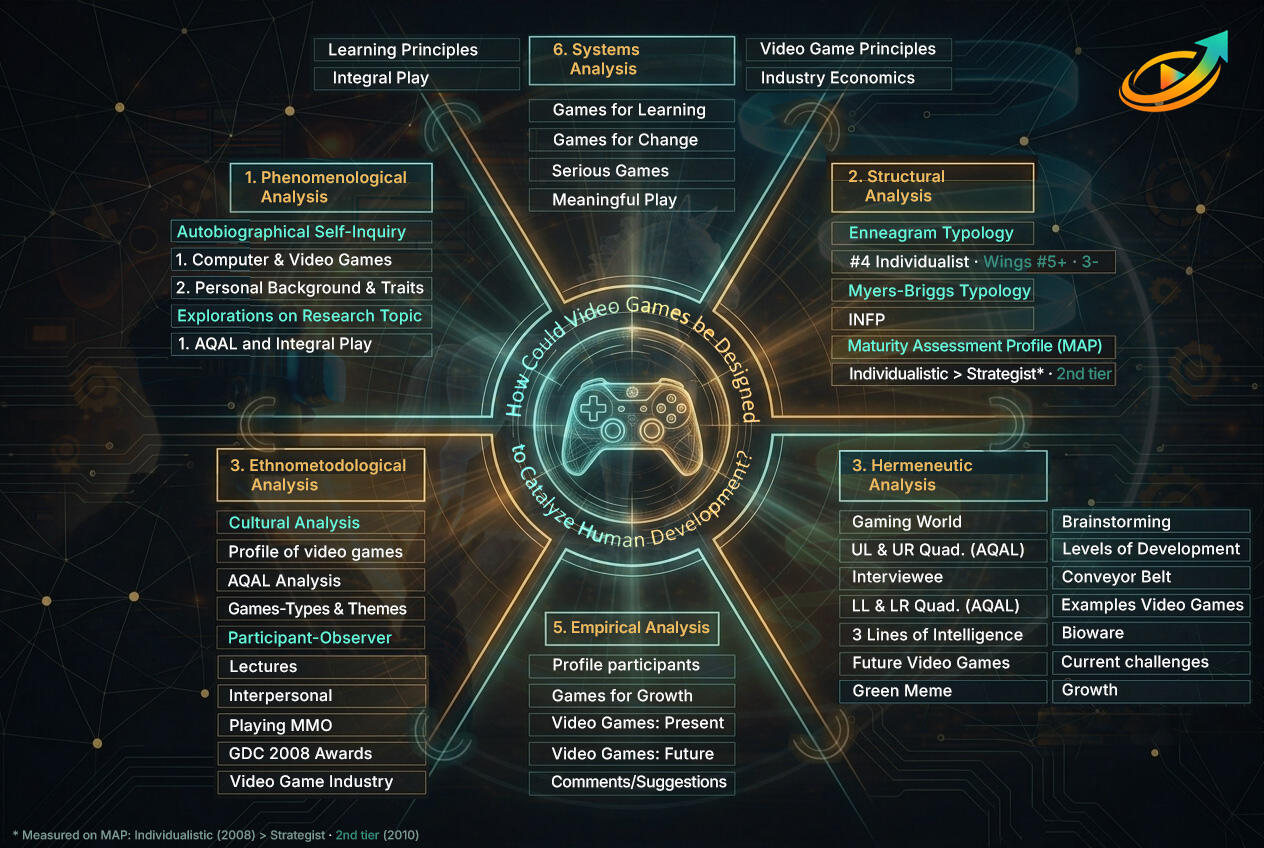

integral Methodological Pluralism (IMP)-Multi - Methods research
Six methods. One question. Every angle of the inquiry, mapped


Zone 1: Phenomenological Analysis - The Games, Up Close
40+ hours of immersive play, analyzed through a developmental lens
Central question:
What are my personal interests, insights, and experience with video games, in terms of how they could be designed to catalyze human development?
The phenomenological dimension required firsthand immersion - not reading about games, but playing them systematically with a
developmental framework in hand. Two methods were applied simultaneously.
The first was autobiographical self-inquiry - a structured exploration of personal and professional background as related to video games
and human development, covering three areas:
1. Computer and Video Games history
2. Personal Background and Traits
3. Explorations on the Research TopicThis process brought a clearer awareness of past, current, and future interests in relation to the research - both subjectively and objectively.
The second was self-observation while playing - a systematic analysis of 12+ games across the full AQAL spectrum:
All Quadrants, all Levels, all Lines, all States, and all Types.The theoretical framework applied was AQAL (Wilber, 2007) and Integral Play Theory (Gordon and Esbjörn-Hargens, 2007),
producing the Self-Assessment Table (see below).
The centerpiece of this methodology was a 40-hour research marathon through Bioshock - chosen for its unusual moral complexity and narrative depth.Also analyzed: World of Warcraft, Portal, Wii Sports, Call of Duty, and others - each rated across every AQALcategory for how deliberately and how deeply
it touched developmental territory.

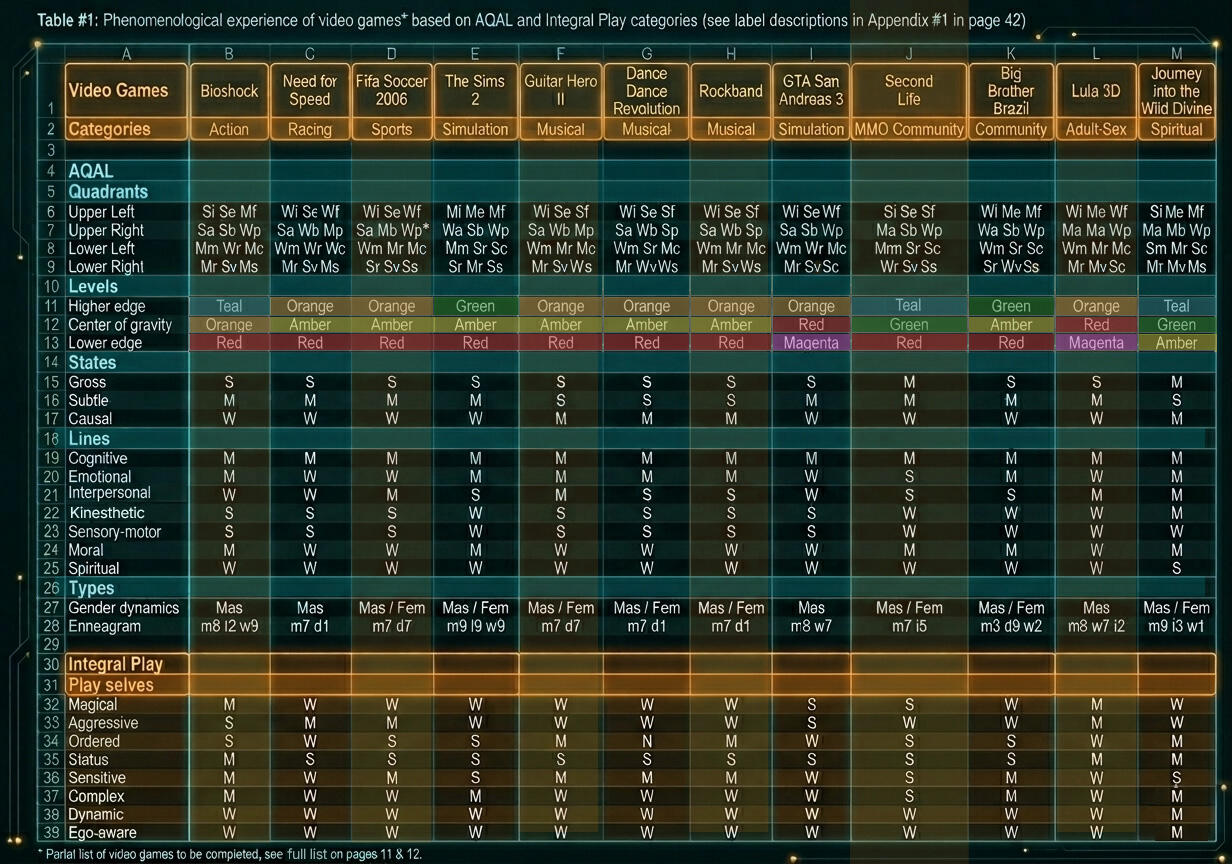
Table 1-Phenomenological Analysis:AQAL self-assessment across 12+ video games
(JITP, SUNNY PRESS, 2010)

How to read the table

AQAL All Quadrants · All Levels · All Lines · All States · All Types


"The most comprehensive map of human consciousness and development." - Ken Wilber, 2007
The developmental OS behind every experiential design decision in Press Play to Grow!

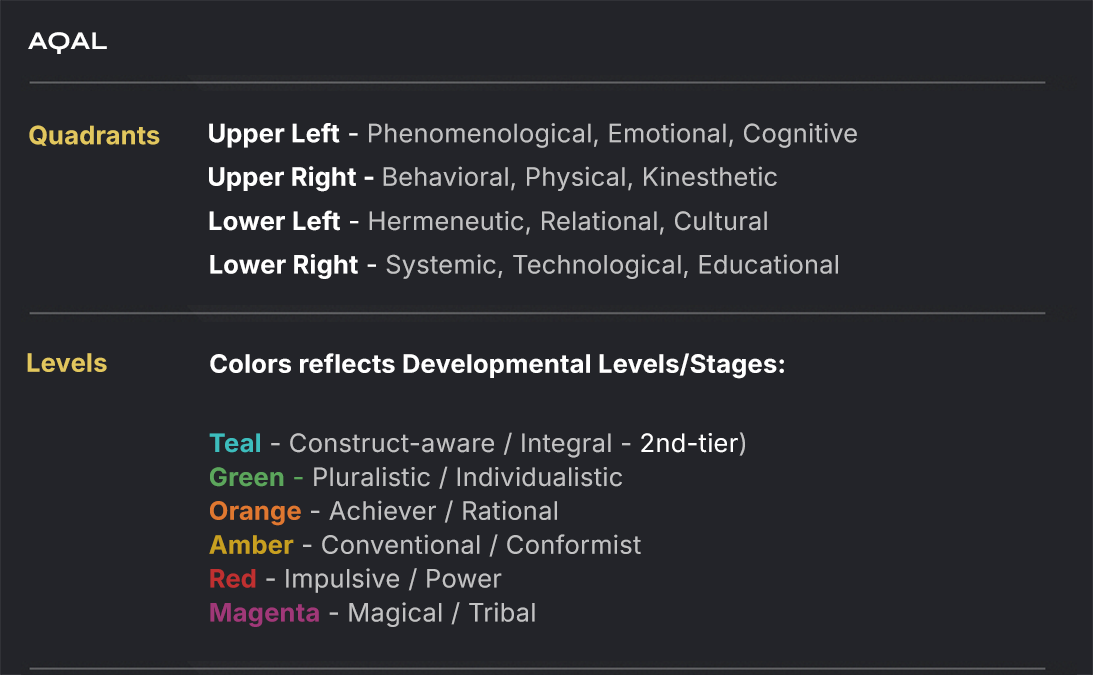
How to read the abbreviations
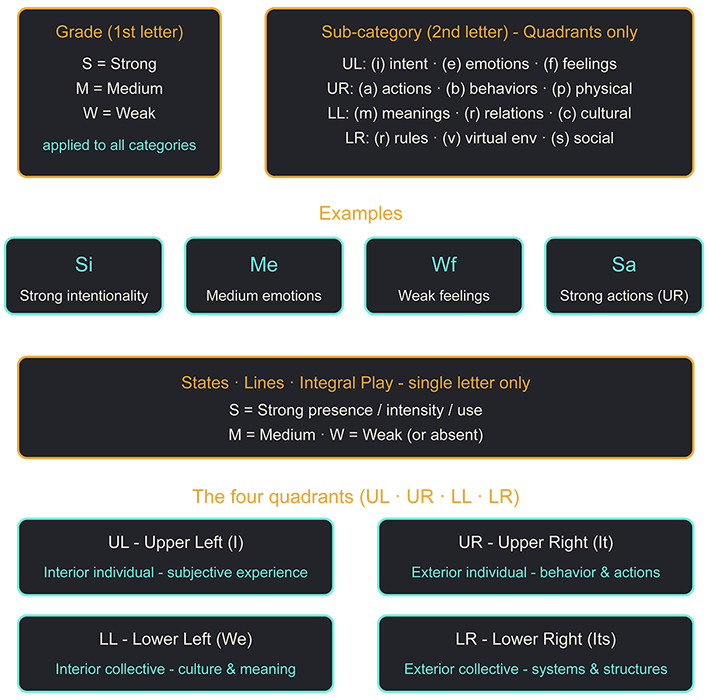


Screen Images-Phenomenological Analysis:AQAL self-assessment across 12+ video games (JITP, SUNY PRESS, 2010)


Zone 2: Structural Analysis
The Researcher's Own Developmental Profile: Knowing the lens before using it
Central question:
How does the structure of my awareness impact my research about how video games could be designed to catalyze human development?
Before investigating human development in games, the research required mapping the researcher's own developmental center of gravity -
the filters, patterns, and blind spots that would inevitably shape the inquiry. Two instruments were used.
Method 1 - Personality Type assessment (Enneagram):
Type 4 - the Individualist/Romantic, with dominant Type 5 wing (Investigator) and strong traits of Type 1 (Perfectionist) and Type 7 (Enthusiast).Traits mapped through the AQAL framework: Special, Different, Holy Origin, Withdrawn, The Bohemian, Level 3, Organic, Intuitive.
High scores: 5 wing, 7, 8, 3. Artistic, Aesthetic, Sensitive, Frustration, Reactive. Low scores: 2, 9.Combined with an MBTI assessment:
INFP - Introspective, Intuitive, Feeling, Perception.

Method 2 - Developmental levels assessment via the Sentence Completion Test from the Maturity Assessment Profile (Level 4/5) - directly supervised
by Susanne Cook-Greuter (February 2008) - leading Harvard developmental researcher and consultant, and creator of the MAP assessment.
The Individualist level (4/5) is a post-conventional stage in the self-identity line - a transitional level between the 4th and 5th Orders of Consciousness
(Kegan, 1994) hovering around the Green altitude.Traits: Individualist, Unique gifts, Social Independence, External Withdrawal, Systems-oriented, Integrative, Creative, Energetic, Maturity, Complexity,
Multi-perspectival, Subjective inquiry.
This self-mapping was not incidental. In integral research, the researcher is part of the data - the developmental level of the observer shapes what is observed, how questions are formed, and what gets noticed in the field.

Zone 3: Zone 4: Ethnomethodological Analysis
Four Memorable Conversations
Central question:
How do others experience the potential for video games to be designed to catalyze human development?
Method: Brainstorming and co-operative inquiry applied to interviews. Four distinct voices - a lead game writer, an integral philosopher,
an integral scholar-practitioner, and an integral technologist. Each opened a different window into the central question.

Interviewees

Interactive Entertainment - Game Design
Daniel Erickson - Lead Game Writer, Bioware
Interviewed at GDC 2008 in San Francisco - one of the highlights of the entire research. Erickson works for Bioware, one of the most successful studios then exploring higher developmental altitudes related to values and morals in their acclaimed narratives: Jade Empire, Knights of the Old Republic, Mass Effect.Themes:
1. Bioware's design philosophy,
2. Examples of video games already touching developmental territory,
3. Future of video games,
4. Current challenges,
5. Growth potential of the medium.His insights were in resonance with all other interviewees:
Confirming that the most sophisticated designers knew they were reaching for something more meaningful.
What was missing was not the creative will. It was the developmental map.
Human Development - Developmenatl Psychology
Ken Wilber - Integral Institute, 2008
Wilber had been thinking about video games as developmental vehicles for nearly two decades.
Themes:
1. Three lines of development,
2. Challenges and potentials,
3. Future of video games,
4. The "Green meme" challenge,
5. Brainstorming on design.Wilber's key contribution: a vision of a game that identifies a player's developmental center of gravity at sign-in, then tilts the playing field to reward
responses above that level - the game becomes an invisible developmental instrument. He named the hardest design challenge: the self-related lines of development involve "a kind of death and rebirth," not learning. That is transformation, not training.He also offered a warning that echoes through the current AI moment: technology without an understanding of human interiority -
without a developmental map - is power without wisdom.
He later mentored the final edits of the paper before its SUNY Press publication in 2010.
David Zeitler - JFKU and Integral Institute
Leading integral scholar-practitioner and faculty member at John F. Kennedy University - also the researcher's teacher at JFKU. Themes: (1) Levels of development, (2) The Conveyor Belt mechanics, (3) Examples of video games, (4) Brainstorming on design. Zeitler focused on how development actually moves between levels - and what a designed experience would need to do to support that movement intentionally rather than accidentally. He also offered a practical caution: "The more complex you make it, the less people you are going to get that would understand it, and appreciate it" - a challenge that remains central to the design question today.
Technology - Programmer - Hardcore Gamer
Alden Gannon - Ex-Microsoft, Aliveworld
Integral thinker, hardcore gamer, and colleague from Aliveworld - where the researcher also worked as a graphic and web designer. Gannon brought both a technology industry perspective and a gamer's firsthand knowledge to the question of developmental design.
Gannon introduced games and designers relevant to the research - among them
Sid Meier (Civilization), Will Wright (SimCity, The Sims), and others. Sid Meier was later met in person at a subsequent GDC.
Will Wright's path would cross the researcher's years later: in 2011, a story submitted through his crowdsourced storyboard platform was selected
and televised as an awarded episode of Bar Karma on Current TV.

Zone 4: Ethnomethodological Analysis
Five Days Inside the Industry:
A participant-observer at the World's Largest Game Industry gathering
Central question:
How would the current video game culture perceive and experience video games being designed to catalyze human development?
Two methods were applied.Method 1 - Cultural Analysis (GDC 2008 and various media): examining the future of video games, AQAL analysis of the industry, and the types and themes
of video games emerging at the frontier.Method 2 - Participant-observer techniques (GDC 2008 and MMO video games): five full days immersed in the cultural field, covering:1. Lectures,
2. Interpersonal exchanges,
3. Playing MMO games,
4. GDC Awards,
5. Video Game Industry observation.
Five full days at the Game Developers Conference 2008 in San Francisco - 16,000+ participants, 120+ exhibitors. The Serious Games Summit, the Game Narrative Summit, lectures on emotional AI, character design, conscious game development, and the future of the medium.
Ray Kurzweil declared at GDC 2008: "In the acceleration of technological progress, there is no industry in the world matching the video game industry today." The intelligence already driving that sophistication - adaptive difficulty, procedural generation, responsive narrative systems - was AI in everything but name.
What the immersion revealed: the industry was reaching toward something more meaningful - consciously, in pockets, through studios like Bioware and through the emerging serious games movement. But it was doing so without a framework. Designers were working on instinct. The developmental map did not exist in their vocabulary. That observation became one of the core findings of the research.

Zone 5: Empirical Analysis
What 150 People Said:
Survey Data Across 3 Groups, 3 Perspectives, 1 Shared Finding

Central question:What would two distinct groups of people - specifically related to
1 - Personal and spiritual development* and
2 - Video games and video game design - have to say about video games being designed to catalyze human development?
* Note: this 2008 research predates current terminology - 'personal and spiritual development' maps to what Press Play to Grow! refers to today as
human development in its fullest sense.
Method: Online and offline survey - 11 main questions with sub-questions and open-ended responses. 150+ participants across three groups.

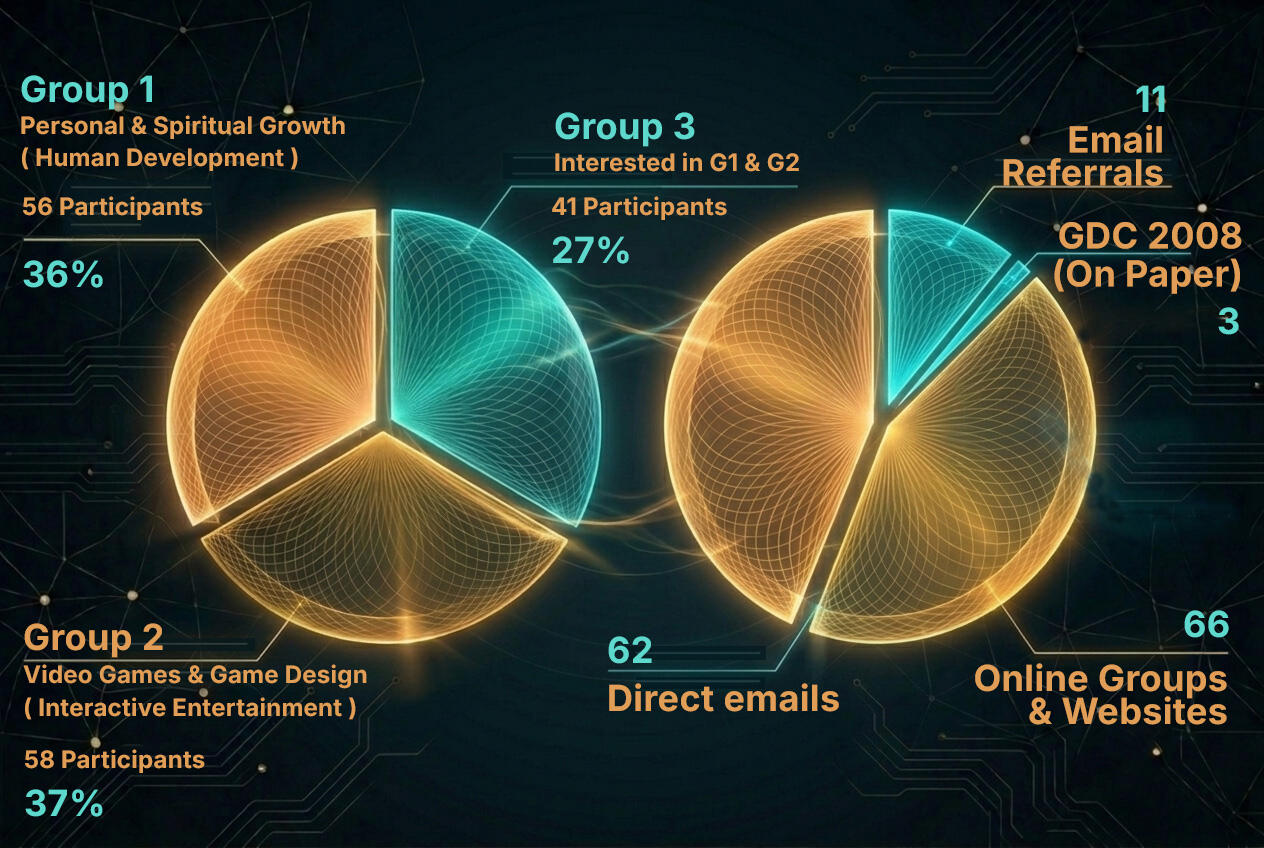
Chart 1-Distribution of 150+ participants across three groups
Chart 2-How participants were reached
(JITP, SUNY PRESS, 2010)

Six themes were investigated:1 - Profile participants
2 - Video games for growth
3 - Comparison of participants
4 - Video Games: Present
5 - Video Games: Future
6 - Comments and suggestions
Key findings:
The majority across all groups said they would play games intentionally designed for personal growth - sometimes or very often. The demand was real and latent.
73.9% of all groups cited designer intentions as the main area needing improvement to make developmental games possible.
Gender balance was surprisingly even - including in Group 2, where GDC 2008 attendance was 80-90% male.
Groups 1 and 2 believed developmental games were still many years away. Group 3 - those with a foot in both worlds - said it was already happening.
Representative voices from the open-ended responses:
Group 1 (Human Development): "The potential is enormous but the challenge is keeping it from feeling like therapy. The moment you know you're being grown, the magic disappears."
Group 2 (Video Gamer Designers & Gamers): "The problem isn't whether games can do this. The problem is that nobody has given us a framework for doing it intentionally. We're working on instinct."
Group 3 (Genuine interest in both): "I've had more genuinely transformative experiences playing certain games than in years of traditional self-help. The medium is underestimated."


Zone 6: Systems Analysis
The Ecosystem Around the Question:
What the academic literature, the industry economics, and the cultural moment revealed

Central question:
What does the current body of knowledge about learning and e-learning explored by the educational system have to contribute in terms of designing
video games to catalyze human development?
Method: Systems Analysis (complemented by economical, technological, and media analysis).
What existed was the framework. And a clear anticipation of where the technology would need to go.
Seven themes were investigated:
1 - Learning principles
2 - Video games principles
3 - Media studies
4 - Integral Play Framework
5 - Serious games
6 - Video Games for Learning
6 - Video Games for Transformation
Academic voices the research engaged with directly included James Paul Gee (What Video Games Have to Teach Us About Learning and Literacy),
Ian Bogost (Persuasive Games), Marc Prensky (Digital Game-Based Learning), Steven Johnson (Everything Bad Is Good for You), and
Clark Quinn (Engaging Learning).Each was pointing in the same direction: games were already among the most powerful learning instruments ever created, and the field had barely scratched the surface of their potential.
The economic reality was equally striking. From 1996 to 2008, computer and video game sales in the U.S. grew from $2.6 billion to $11.7 billion per year -
more than four times the growth in industry software sales overall. By 2007, U.S. video game sales reached $18.8 billion - a 43% increase over the prior year - with $37.5 billion in worldwide revenues. Game-based learning had already attracted $125 million in investment by 2006.
The infrastructure, the reach, and the economic scale were already there.
The conclusion: what was missing was not the technology, the audience, or the market. What was missing was the developmental framework to make the impact intentional.
By 2026, the global game industry has grown into a multi-billion dollar force - and 36% of game professionals now use generative AI tools in their daily work. The scale has multiplied. The developmental framework is still missing.
That gap is exactly what Press Play to Grow! was built to close.

Site Architecture
Home



Gateway Pages









Research Trajectory · Deep Dive









Communication · Many Channels








contact
On the same wavelength?
If this research resonates with you - whether you work in AI, Interactive Entertainment,
or Developmental Psychology, or simply want to connect as a kindred spirit - let's talk.


RESEARCH EVIDENCE

© 2026 Press Play to Grow! All rights reserved.